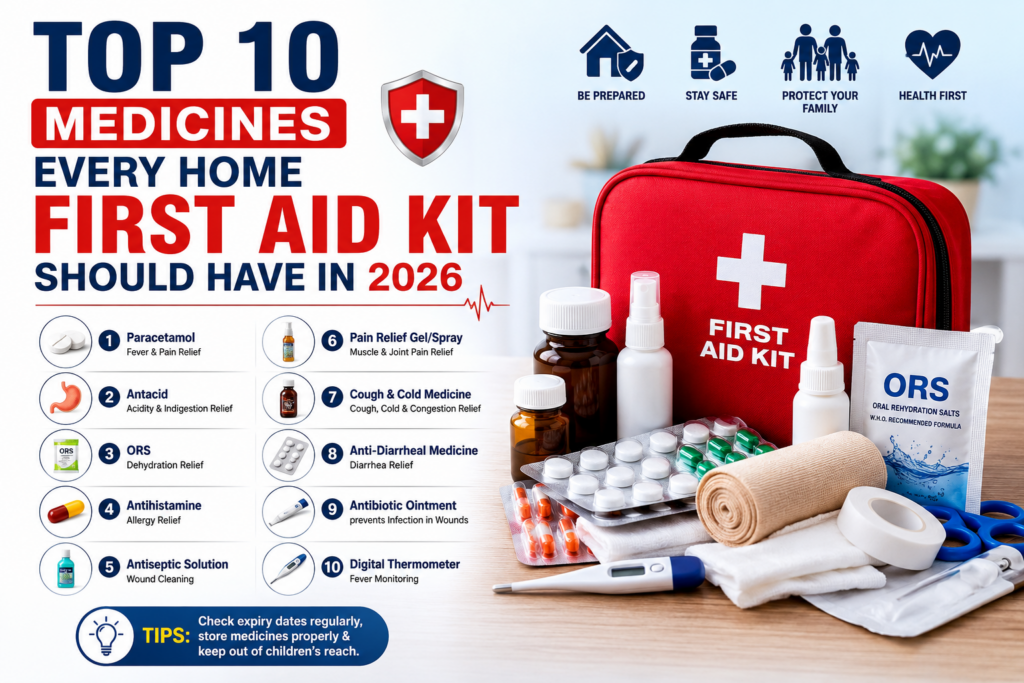
A well-stocked first aid kit is one of the most important essentials for every household. Whether it’s a sudden headache, fever, minor injury, allergic reaction, or digestive issue, having the right medicines readily available can help provide quick relief and prevent complications until professional medical care is available.
In 2026, healthcare awareness has increased significantly, and experts recommend maintaining a basic first aid kit with essential medicines and medical supplies. While these medicines can help manage common health concerns, it is always important to consult a healthcare professional for serious conditions or persistent symptoms.
Why Every Home Needs a First Aid Kit
A properly equipped first aid kit can help:
- Manage minor illnesses and injuries
- Provide immediate relief during emergencies
- Reduce unnecessary hospital visits
- Save valuable time during critical situations
- Support family health and safety
1. Paracetamol (Acetaminophen)
Common Uses
- Fever reduction
- Headache relief
- Body aches
- Mild to moderate pain
Paracetamol remains one of the most commonly used and trusted medicines worldwide. It is generally considered safe when used according to the recommended dosage and can be used by both adults and children under appropriate guidance.
Important Precautions
- Avoid exceeding the recommended daily dose.
- Consult a doctor if symptoms persist.
2. Antacid Tablets or Syrup
Common Uses
- Acidity
- Heartburn
- Indigestion
- Stomach discomfort
Modern lifestyles and irregular eating habits often lead to digestive issues. Antacids provide quick relief from excess stomach acid and help reduce discomfort.
Important Precautions
- Avoid excessive use.
- Seek medical advice for frequent symptoms.
3. Oral Rehydration Solution (ORS)
Common Uses
- Dehydration
- Diarrhea
- Vomiting
- Heat exhaustion
ORS helps restore fluids and essential electrolytes lost due to dehydration. It is especially important during hot weather and gastrointestinal illnesses.
Benefits
- Prevents dehydration
- Supports faster recovery
- Safe for most age groups
4. Antihistamine Medicine
Common Uses
- Allergies
- Itching
- Sneezing
- Insect bites
Allergic reactions can occur unexpectedly. Antihistamines help reduce allergy symptoms and provide relief from irritation and discomfort.
Important Precautions
- Some antihistamines may cause drowsiness.
- Follow dosage instructions carefully.
5. Antiseptic Solution
Common Uses
- Cleaning cuts
- Minor wounds
- Scratches
- Skin disinfection
Antiseptic solutions help prevent infections by eliminating harmful microorganisms from affected areas.
Benefits
- Reduces infection risk
- Supports wound healing
- Easy to use
6. Pain Relief Gel or Spray
Common Uses
- Muscle pain
- Joint pain
- Sports injuries
- Minor sprains
Topical pain relief products provide targeted relief without affecting the entire body.
Benefits
- Quick application
- Localized pain management
- Convenient for active individuals
7. Cough and Cold Medicine
Common Uses
- Common cold
- Cough
- Nasal congestion
- Sore throat symptoms
Seasonal changes often increase the risk of respiratory infections. Keeping basic cough and cold medication in your first aid kit can help manage symptoms effectively.
Important Precautions
- Use age-appropriate formulations.
- Consult a healthcare professional if symptoms worsen.
8. Anti-Diarrheal Medicine
Common Uses
- Acute diarrhea
- Travel-related stomach issues
- Digestive discomfort
Digestive disturbances can occur unexpectedly due to contaminated food, infections, or dietary changes.
Benefits
- Helps reduce symptoms
- Supports comfort during recovery
Important Note
Persistent diarrhea requires medical evaluation.
9. Antibiotic Ointment
Common Uses
- Minor cuts
- Abrasions
- Small skin wounds
Antibiotic ointments help protect minor wounds from bacterial infections and support faster healing.
Benefits
- Easy application
- Infection prevention
- Suitable for minor injuries
10. Digital Thermometer
Although not a medicine, a digital thermometer is an essential component of every first aid kit.
Benefits
- Accurate temperature monitoring
- Early illness detection
- Quick and reliable readings
Regular temperature monitoring can help identify fever-related illnesses at an early stage.
Additional First Aid Essentials
Besides medicines, every first aid kit should also contain:
- Sterile bandages
- Adhesive bandages
- Cotton and gauze
- Medical tape
- Disposable gloves
- Scissors
- Hand sanitizer
- Face masks
- Ice packs
- Emergency contact numbers
Tips for Maintaining Your First Aid Kit
Check Expiry Dates Regularly
Expired medicines may lose effectiveness and should be replaced immediately.
Store Properly
Keep medicines in a cool, dry place away from direct sunlight.
Keep Out of Children’s Reach
Store all medicines safely to prevent accidental ingestion.
Review Every Six Months
Update your kit periodically and replace used items.
How HDPharma Supports Healthcare Needs
At HDPharma, we understand the importance of accessible and reliable healthcare products. As a trusted pharmaceutical company, we are committed to supplying high-quality pharmaceutical products that support families, healthcare providers, and communities across India.
Our focus on quality, safety, and customer satisfaction helps ensure that essential healthcare products remain available whenever they are needed.
Conclusion
A well-prepared first aid kit is an investment in your family’s health and safety. From pain relievers and antacids to ORS and antiseptic solutions, these essential medicines can help manage common health issues effectively while providing immediate support during emergencies.
Remember that first aid medicines are intended for temporary relief and basic care. For severe symptoms, persistent illness, or medical emergencies, always seek professional healthcare assistance.
Frequently Asked Questions (FAQs)
What is the most important medicine for a first aid kit?
Paracetamol, ORS, antiseptic solution, and antihistamines are among the most essential items.
How often should I check my first aid kit?
Experts recommend checking and updating your first aid kit every six months.
Can I keep antibiotics in my home first aid kit?
Antibiotics should only be used under the guidance of a qualified healthcare professional.
Is ORS necessary in every home?
Yes. ORS is highly useful for managing dehydration caused by diarrhea, vomiting, or excessive heat exposure.
What should I do if a medicine expires?
Dispose of expired medicines safely and replace them with fresh supplies immediately.