Best Health Tips During Summer Heat Wave
Summer heat waves can significantly impact your health, especially when temperatures remain high for several consecutive days. Extreme heat can lead to dehydration, heat exhaustion, heatstroke, and other serious health complications. Whether you’re working outdoors, traveling, or staying at home, taking the right precautions is essential.
In this guide, we’ll explore the best health tips during a summer heat wave to help you stay safe, hydrated, and comfortable throughout the season.
What Is a Heat Wave?
A heat wave is a prolonged period of excessively hot weather, often accompanied by high humidity. Heat waves can increase the risk of heat-related illnesses and affect people of all ages, particularly children, older adults, and individuals with pre-existing medical conditions.
Why Summer Heat Waves Can Be Dangerous
During extreme heat, your body works harder to maintain its normal temperature. When the body cannot cool itself efficiently, serious health problems may occur.
Common Heat-Related Health Issues
| Health Condition | Symptoms |
|---|---|
| Dehydration | Dry mouth, dizziness, fatigue |
| Heat Cramps | Muscle spasms, sweating |
| Heat Exhaustion | Weakness, nausea, headache |
| Heatstroke | High body temperature, confusion, unconsciousness |
Heatstroke is a medical emergency and requires immediate medical attention.
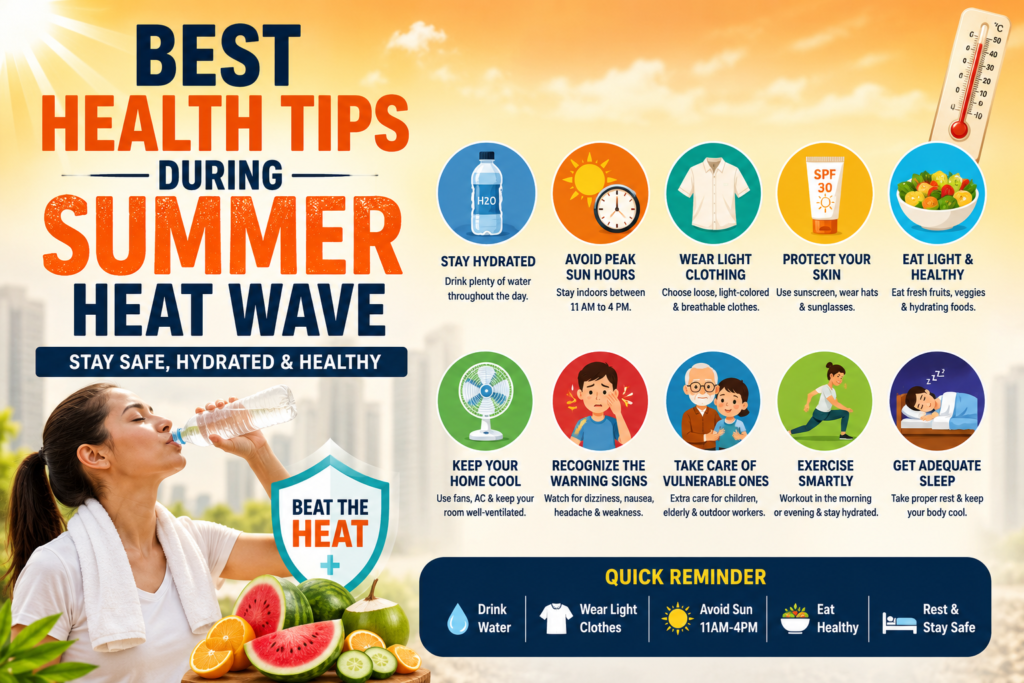
1. Stay Hydrated Throughout the Day
One of the most effective ways to protect yourself during a heat wave is by staying hydrated.
Hydration Tips
- Drink water regularly, even if you don’t feel thirsty.
- Carry a reusable water bottle when outdoors.
- Consume water-rich fruits and vegetables.
- Avoid excessive caffeine and sugary drinks.
- Drink oral rehydration solutions if sweating heavily.
Best Hydrating Foods
| Food | Water Content |
|---|---|
| Watermelon | 92% |
| Cucumber | 96% |
| Orange | 86% |
| Strawberry | 91% |
| Coconut Water | Natural Electrolytes |
2. Avoid Going Outdoors During Peak Heat Hours
The sun is usually strongest between 11:00 AM and 4:00 PM.
What You Should Do
- Schedule outdoor activities early in the morning or evening.
- Stay indoors during peak sunlight hours.
- Use umbrellas, hats, or shaded areas when outside.
- Take frequent breaks if working outdoors.
3. Wear Lightweight and Breathable Clothing
Choosing the right clothing can help regulate body temperature.
Recommended Clothing
- Light-colored cotton clothes
- Loose-fitting garments
- Breathable fabrics
- Wide-brimmed hats
- UV-protective sunglasses
Avoid dark-colored or tight-fitting clothing that traps heat.
4. Protect Your Skin from Sun Damage
Extended exposure to UV rays can cause sunburn, premature aging, and increase the risk of skin cancer.
Skin Protection Tips
- Apply broad-spectrum sunscreen (SPF 30 or higher).
- Reapply sunscreen every 2 hours.
- Wear sunglasses with UV protection.
- Cover exposed skin whenever possible.
5. Eat Light and Healthy Meals
Heavy meals can increase body temperature and make you feel sluggish.
Best Foods During a Heat Wave
- Fresh fruits
- Green salads
- Yogurt
- Coconut water
- Vegetable soups
- Smoothies
Foods to Avoid
- Fried foods
- Excessively spicy dishes
- Processed snacks
- High-sugar beverages
6. Keep Your Home Cool
Maintaining a cool indoor environment can reduce heat-related stress.
Cooling Strategies
- Use fans and air conditioners.
- Close curtains during the hottest part of the day.
- Open windows during cooler evening hours.
- Use cooling mats or cold compresses.
7. Recognize Early Signs of Heat Exhaustion
Early detection can prevent severe complications.
Warning Signs
- Excessive sweating
- Weakness
- Dizziness
- Headache
- Nausea
- Rapid heartbeat
If symptoms worsen, seek medical assistance immediately.
8. Take Special Care of Children and Older Adults
Children and senior citizens are more vulnerable to heat-related illnesses.
Safety Measures
- Encourage frequent hydration.
- Avoid leaving anyone in parked vehicles.
- Monitor for signs of overheating.
- Ensure cool and ventilated living spaces.
9. Exercise Smartly During Hot Weather
Physical activity remains important but should be adjusted during extreme heat.
Exercise Tips
- Work out early morning or late evening.
- Stay hydrated before, during, and after exercise.
- Reduce workout intensity on extremely hot days.
- Listen to your body’s signals.
10. Get Adequate Sleep
High temperatures can disrupt sleep quality.
Better Sleep During Summer
- Use breathable bedding.
- Keep your room cool and ventilated.
- Take a cool shower before bedtime.
- Avoid heavy meals before sleeping.
Quick Heat Wave Safety Checklist
| Safety Measure | Recommended |
|---|---|
| Drink Water Frequently | ✔ |
| Avoid Peak Sun Hours | ✔ |
| Wear Light Clothing | ✔ |
| Use Sunscreen | ✔ |
| Eat Water-Rich Foods | ✔ |
| Stay Indoors When Possible | ✔ |
| Monitor Heat Illness Symptoms | ✔ |
Frequently Asked Questions (FAQs)
How much water should I drink during a heat wave?
Most adults should aim for 2–3 liters of water daily, though requirements may increase based on activity levels and temperature.
What are the first signs of heatstroke?
Symptoms include confusion, extremely high body temperature, dizziness, rapid pulse, and loss of consciousness.
Is coconut water good during hot weather?
Yes. Coconut water contains natural electrolytes that help maintain hydration and replenish minerals lost through sweating.
Which fruits are best during a heat wave?
Watermelon, oranges, strawberries, muskmelon, and cucumbers are excellent choices due to their high water content.
Who is most at risk during extreme heat?
Older adults, infants, outdoor workers, and people with chronic health conditions are most vulnerable.
Conclusion
Heat waves are becoming increasingly common and intense, making it essential to prioritize your health during hot weather. By staying hydrated, avoiding excessive sun exposure, wearing appropriate clothing, and recognizing early warning signs of heat-related illnesses, you can significantly reduce health risks.
Following these best health tips during a summer heat wave will help you stay comfortable, energized, and protected throughout the hottest months of the year. Remember that prevention is always better than treatment when it comes to extreme heat and summer health safety.